WordPress backup is a very necessary task. During website operation, it's inevitable to encounter some issues, such as website malware infection or technical failures. If you haven't backed up your website, it might become inaccessible permanently. However, with a backup, you can restore the website data to a normal state, minimizing website losses. Therefore, friends who haven't yet learned how to back up a WordPress website should start learning now.
Backup can sometimes be more important than building a website
Imagine, you've finally learned how to build a WordPress website by following tutorials, then you published posts, products, did SEO, built backlinks, and managed to increase website traffic. Suddenly one day, the website gets infected with malware, or unfortunately, the server encounters a problem (Naiba has experienced a server room fire that led to complete data loss on the entire server). In this situation, if you have no backup, wouldn't all the hard work you put into building the website go down the drain?
Therefore, data backup is the most important thing for a website. After we build a WordPress website, there are many ways to back it up, all of which are very simple, so don't worry about backup being complicated.
Several Methods for WordPress Website Backup
WordPress backup methods can be broadly categorized into: server-side backup, manual backup, and plugin backup.
Server-Side Backup
Server-side backup varies depending on the type of server you purchase. For example, if you purchaseSiteGround和Hostingerthis type of Shared Hosting, it usually comes with automatic backup functionality. The server will automatically back up your website on schedule. If a problem occurs, you can directly restore it from the server's Admin Dashboard.
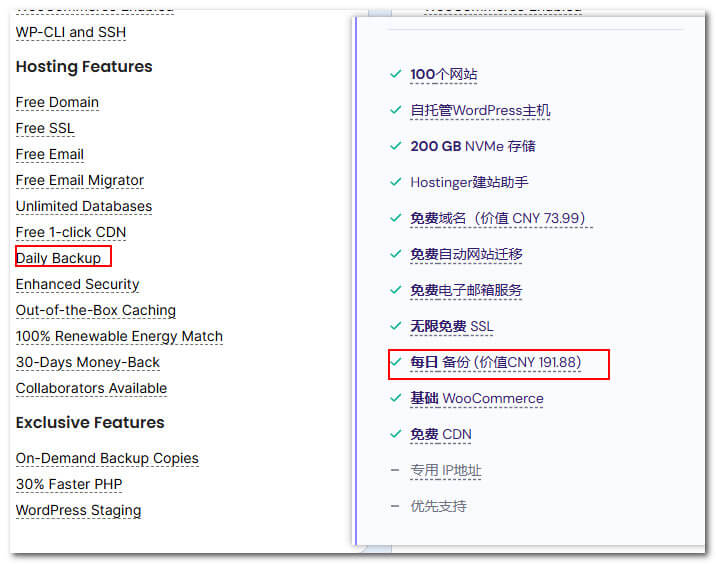
However, if we purchase our own VPS and install the website viaBaota Panelthen the server itself does not support automatic backup functionality. We need to perform manual backups or set up automatic server backups.
Manual Backup
Manual backup can be done either from the server Admin Dashboard or from the website Admin Dashboard using plugins.
Backing up from the server Admin Dashboard: If the server supports backup features, you can click the backup button for manual backup, or use the server's file manager and database functions for manual backup. This operation is relatively complex. Beginners just need to know this option exists; there's no need to use this method.
Another manual backup method is to install a backup plugin in the WordPress website Admin Dashboard and then perform the backup through the plugin. This method is more recommended and is suitable for any WordPress website.
Plugin Backup
Plugin backup is a mainstream method for WordPress website backup. WordPress has many free and paid backup plugins, all of which can achieve one-click backup of website data from the Admin Dashboard.
WordPress Website Backup Plugins
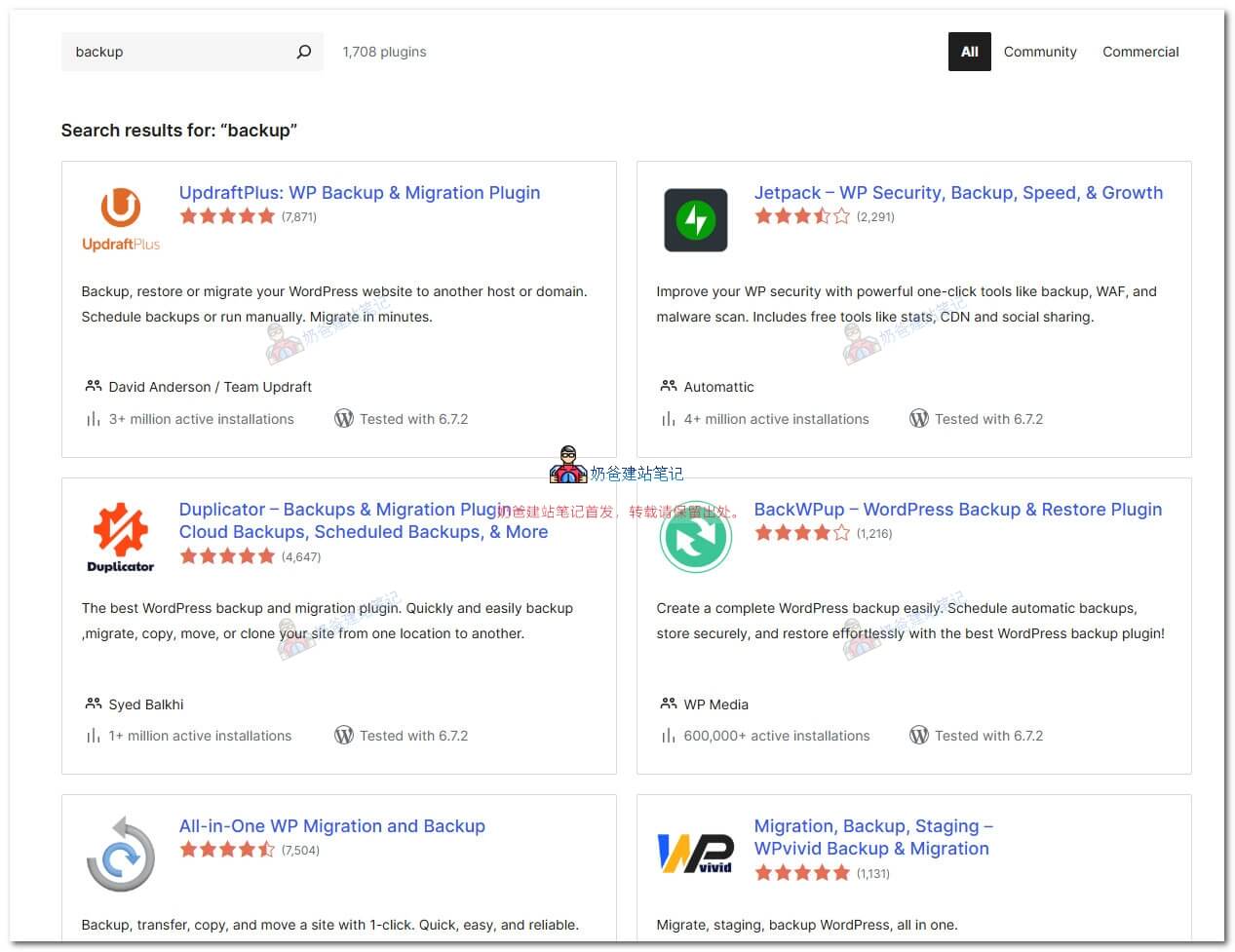
From the WordPress Admin Dashboard plugin repository, searching for „backup“ will yield many backup plugins. Their function is the same: to package your website„s database and files, then save them to the server, another location, or download them locally.
Here, I'd like to recommend a few backup plugins that Naiba has used (the ones introduced here are not necessarily the best; you can also choose your preferred plugins).
UpdraftPlus: WP Backup & Migration Plugin (with usage tutorial)
UpdraftPlus is a widely used backup plugin on the WordPress platform, with over 3 million websites globally using it.
From the WordPress website Admin Dashboard, go to Plugins > Add New, search for „UpdraftPlus,“ install, and activate the plugin.
Plugin Address:https://wordpress.org/plugins/updraftplus/
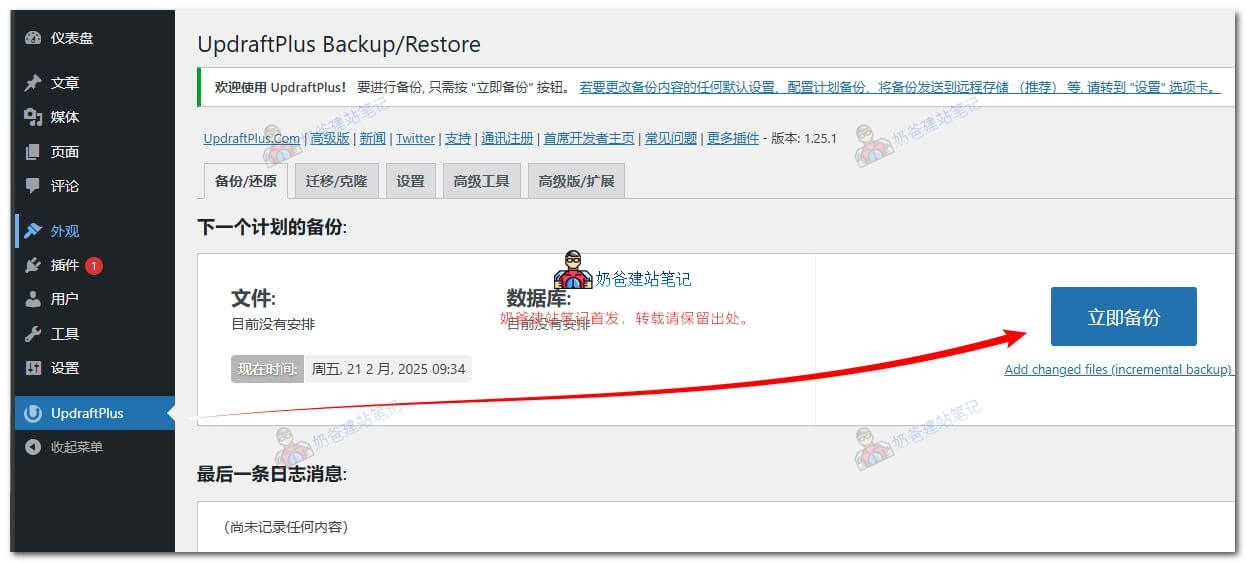
After installation is complete, you can see „UpdraftPlus“ in the left-side menu of the Admin Dashboard. After entering, click the „Backup Now“ button, and the plugin will back up the website database and files to the server.
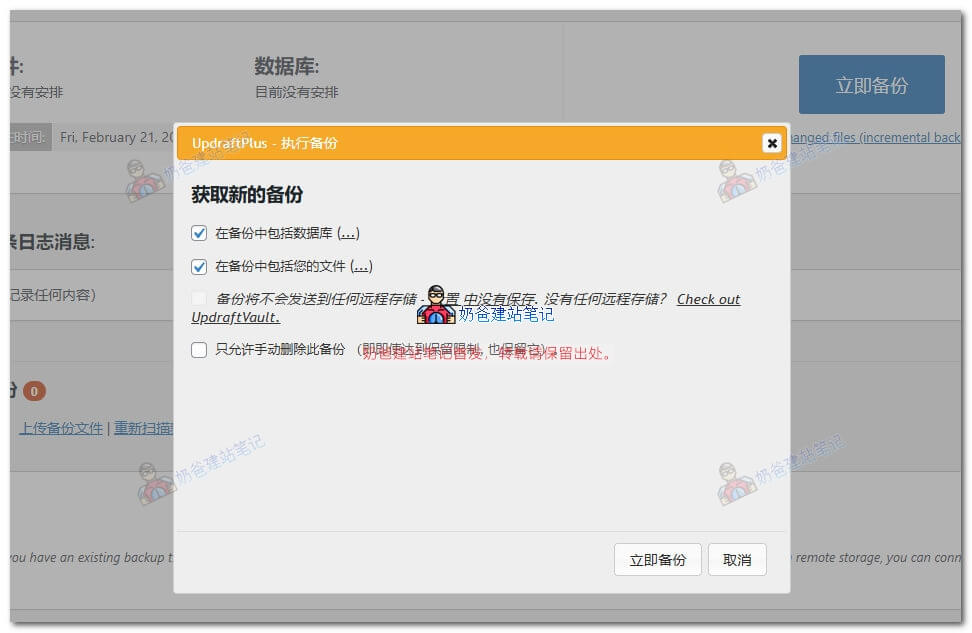
Of course, you can also set whether to back up the database and files; simply check the boxes as needed.
If you check "Only allow manual deletion of this backup," then after you set up automatic backup functionality, this backup will not be deleted by the plugin; only you can manually delete it. After making significant changes or optimizations to your website, you can manually back it up to prevent the plugin from automatically overwriting it.
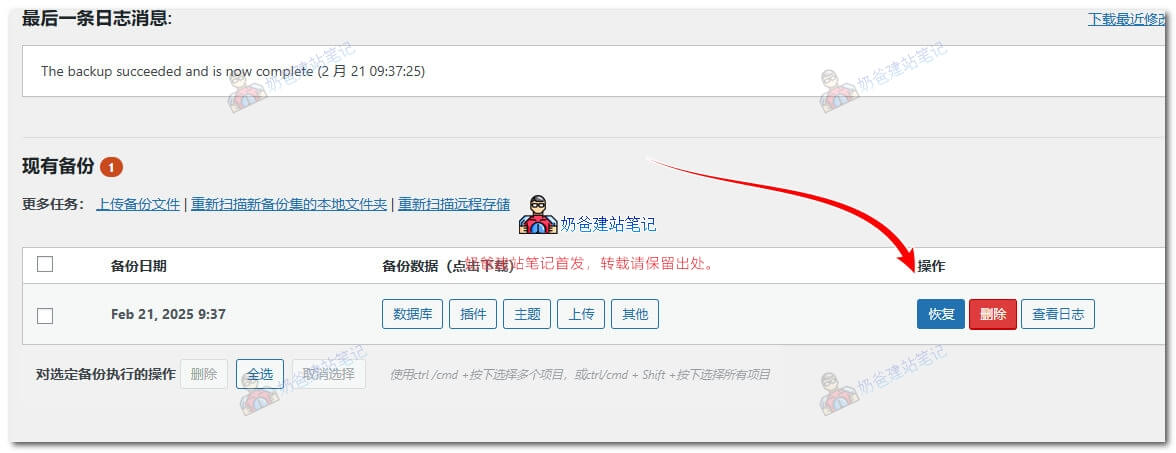
When your website encounters a problem one day and needs restoration, click the „Restore“ button next to the backup you wish to restore in the backup list, and the website can be restored to its previously backed-up state with one click.
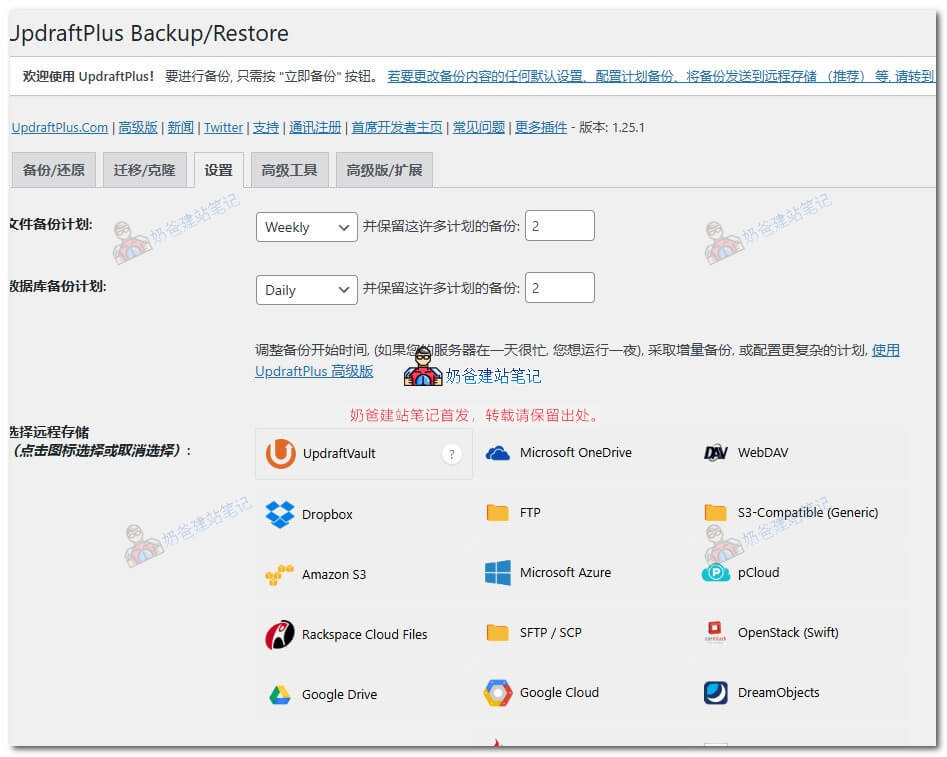
The above describes the manual backup operation method. We can enter the „Settings“ tab to set up automatic backup, file backup schedule, and database backup schedule. Set the backup frequency and then fill in the number of backups to retain. Naiba suggests setting the number of file backups lower, and the frequency doesn„t need to be too frequent, because website files are usually large, and backing them up consumes significant server resources and storage space. For the database, it“s recommended to retain more backups. You can set the backup frequency based on your website„s update rate, such as daily or weekly backups.
In Remote Storage, you can choose to back up to Google Drive. Some other remote backup locations require the premium version. If you are willing to pay to enable other options, that's also possible.
The storage space for free Google Drive users is also limited. If your website data grows large, it will definitely be insufficient. In that case, you can consider upgrading Google Drive, or manually back up and download the backup to your local machine for safekeeping.
BackWPup – WordPress Backup & Restore Plugin (with usage tutorial)
The new version of BackWPup has a cleaner interface. Upon first installation, there is a setup wizard. You just need to configure the backup content, backup schedule, and storage location. For subsequent backups, simply click the „Backup Now“ button in the top right corner to perform a one-click backup.
Plugin Address:https://wordpress.org/plugins/backwpup/
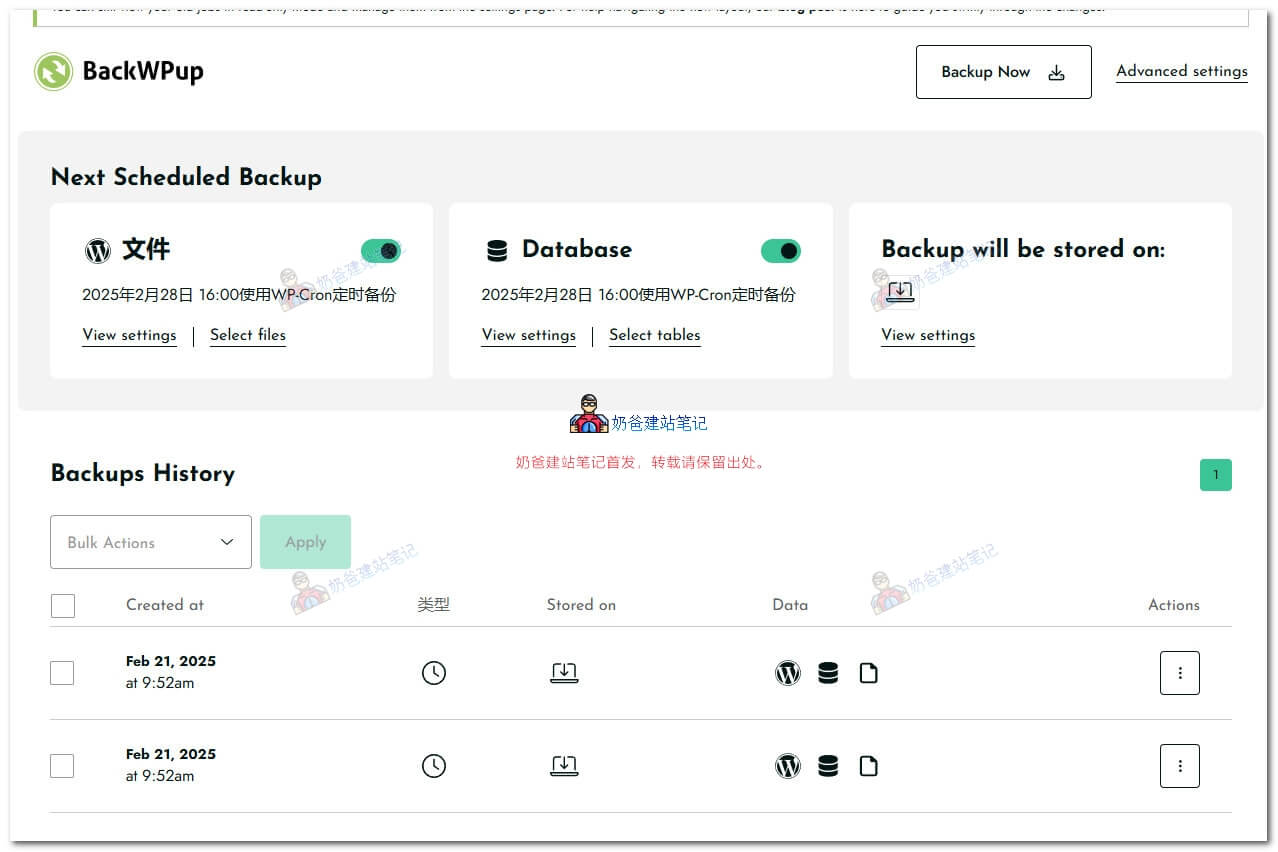
Click „Advanced settings“ next to the backup button in the top right corner to modify the settings.
The three blocks under Next Scheduled Backup correspond to files, database, and save location respectively. Clicking View settings below allows you to configure these backup items. Unfortunately, BackWPup's remote backup does not support Google Drive; it can only use the free Dropbox. Free Dropbox users only have 2GB of space, so remote storage is only sufficient for database files at most. Website files are definitely not enough for remote storage. If needed, pay to upgrade the storage space.
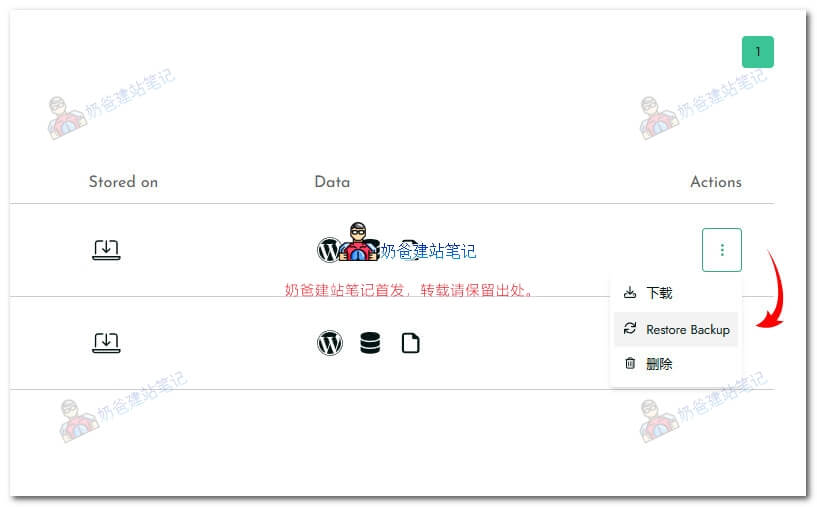
A relatively inconvenient aspect is that with BackWPup, you must download the backup file to your local machine before you can restore it via Restore Backup upload. It cannot perform a one-click restore directly using backup files saved on the server like UpdraftPlus.
All-in-One WP Migration and Backup (recommended for manual backup)
All-in-One WP Migration and Backup is a plugin commonly used by Naiba for website backup and migration. Unfortunately, many of its advanced features are paid, and only basic backup and restore are free.
Plugin Address:https://wordpress.org/plugins/all-in-one-wp-migration/
All-in-One WP Migration and Backup packages the database and website files into a single .wpress file, making it more concise.
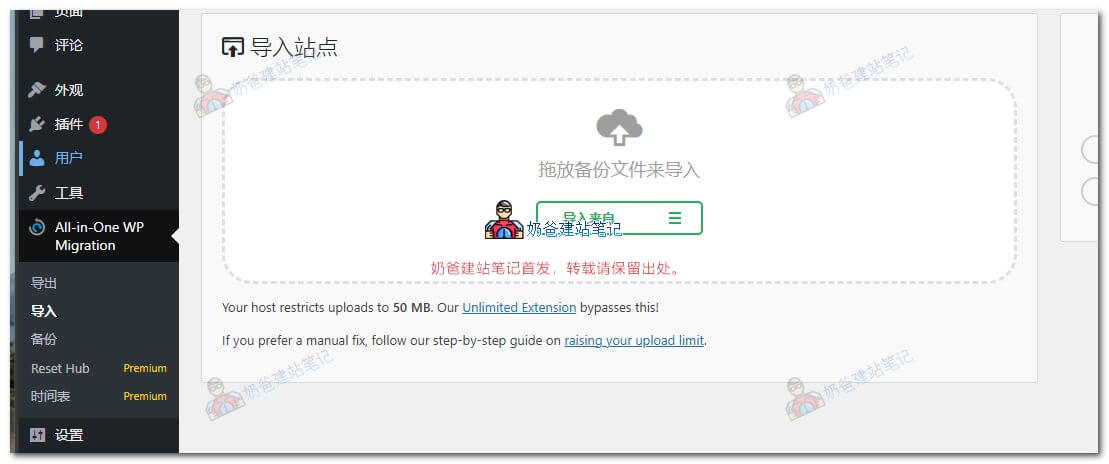
Another drawback is the upload size limit for restoration. This can be bypassed by modifying server configurations or purchasing its premium extension. (Purchase Premium Extension for 9.9 yuan)
This plugin is particularly convenient for website migration after backup because there is only one backup file. Install a blank WordPress site on a new server, then install All-in-One WP Migration and Backup along with the premium extension, upload the backup file, and the site is restored. If you change the website domain, it will automatically update the URLs to the latest during restoration, which is very convenient.
Summary of WordPress Backup Plugins
For daily backups and automatic backups, UpdraftPlus is recommended. For manual backups and website migration, All-in-One WP Migration and Backup is recommended.
Other popular backup plugins found via backend search can also be installed and tested if interested. Choose the one that suits you best. After installation, it is recommended to test the restore function immediately after backing up.
Essential Tips and Pitfalls to Avoid for WordPress Website Backup
Although WordPress backup is simple, it is not 100% safe. If your website is important to you, you need to understand and address the following backup considerations.
1. ❌ Blindly Relying on Hosting Provider Backups
Hosting provider backups are not 100% reliable. Many providers advertise backup features but do not actually back up your data, betting that your website won't need data recovery. (This mainly occurs with some cheap plans.)
Moreover, hosting provider backups can also become unavailable due to program errors or hardware failures. Naiba once experienced a situation where a data center fire destroyed all machine backups, alas!
2. ❌ Backing Up Files Only, Not the Database
WordPress website data consists of two parts: the database and files. Some people think that saving only the website files constitutes a website backup. In reality, all textual content on your website is stored in the database, so both the database and files need to be backed up.
3. ❌ Storing Backup Files on the Same Server as the Website
Although server issues are not common, you cannot guarantee that you won't encounter server failures. When a server fails, your backup files become inaccessible. Therefore, it is best to store backups separately from the website server, such as backing up to a remote server or downloading backups to your local computer.
4. ❌ Never Testing Backup File Validity
Regardless of the backup method you use, for security reasons, you should test your backups. For example, after backing up, make some modifications to the website, delete some content, and then immediately restore using the backup data. If the restoration is successful, it indicates the backup data is valid; otherwise, there is an issue with the backup data.
Naiba once encountered a situation where a backup plugin backed up data, but after restoration due to a website issue, the backup file's database failed to recognize correct percentage signs, causing website data errors.
5. ❌ Backups Causing Server Resource Exhaustion
The essence of backup is the server using compression software to compress and package website files, which consumes server CPU resources. If your website data is large and the server configuration is poor, the server may become particularly sluggish during backup, and the website may become inaccessible. In such cases, it is recommended to upgrade the server and schedule backups outside peak website traffic hours. If necessary, consider using the incremental backup feature of paid backup plugins.
Additionally, if too many backup files are retained on the local server, it may fill up the server's hard drive, causing the website to become inaccessible. You need to monitor hard drive usage regularly.
6. ❌ Restoration failure due to ignoring version compatibility
WordPress plugins may have different PHP version requirements. If the PHP version differs between when your website was backed up and when you restore it, this may cause restoration to fail.
7. ❌Backup frequency is disconnected from business needs
If you run an e-commerce website with new orders daily, but your database backup frequency is set to weekly, restoring from a backup could result in losing at least a week's worth of data when an issue occurs. In such cases, it's best to adjust the database backup frequency to daily or even every few hours.
8. ❌Data incompatibility between different backup plugins
Data backed up by different plugins is not interchangeable. Do not use a different plugin to restore backup data. If you manually backed up data from the server backend and database, you must also restore it manually.
One-Click Restore for WordPress Website Backup
The prerequisite for one-click restoration of a WordPress website is that you have a backup file. Without a backup file, one-click restoration is not possible.
If you have a backup file, use the plugin you used for backup or the backup function in your server's control panel, click the restore button, and you can achieve one-click website restoration.
Related Articles:Complete Guide to WordPress Website Restoration: 3 Recovery Solutions with Baota/cPanel/Plugins – Naibabiji