
Most foreign trade enterprises commission website building companies to create their websites. However, if you encounter a website built by a company like the one analyzed in this foreign trade enterprise case study, you will truly be scammed miserably—no matter how cheap, don't do it.
Case study source
In a group, a netizen was asking about website theme settings, and it turned out that their company's website was previously built by a website building company. After expiration, the company stopped providing service, leaving them clueless about how to modify the theme themselves.
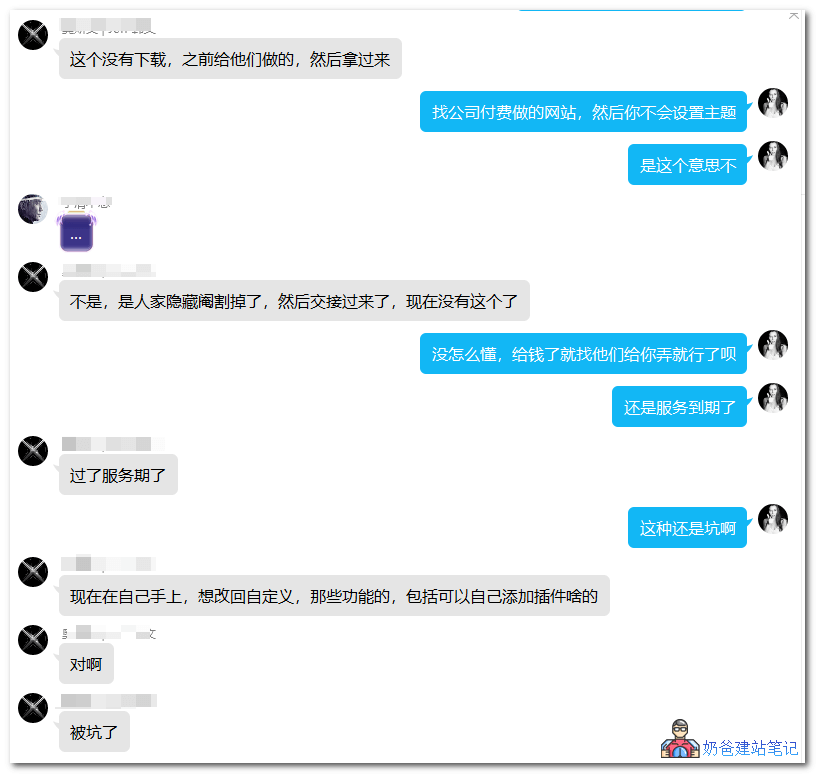
Then Naiba privately messaged him for a URL and checked their company website.
Upon checking, OMG, they were badly ripped off.
Below, Naiba will analyze with you why their website was ripped off by this website building company.
Specific case analysis
First, let's look at the homepage.
A screenshot of their company website is as follows:
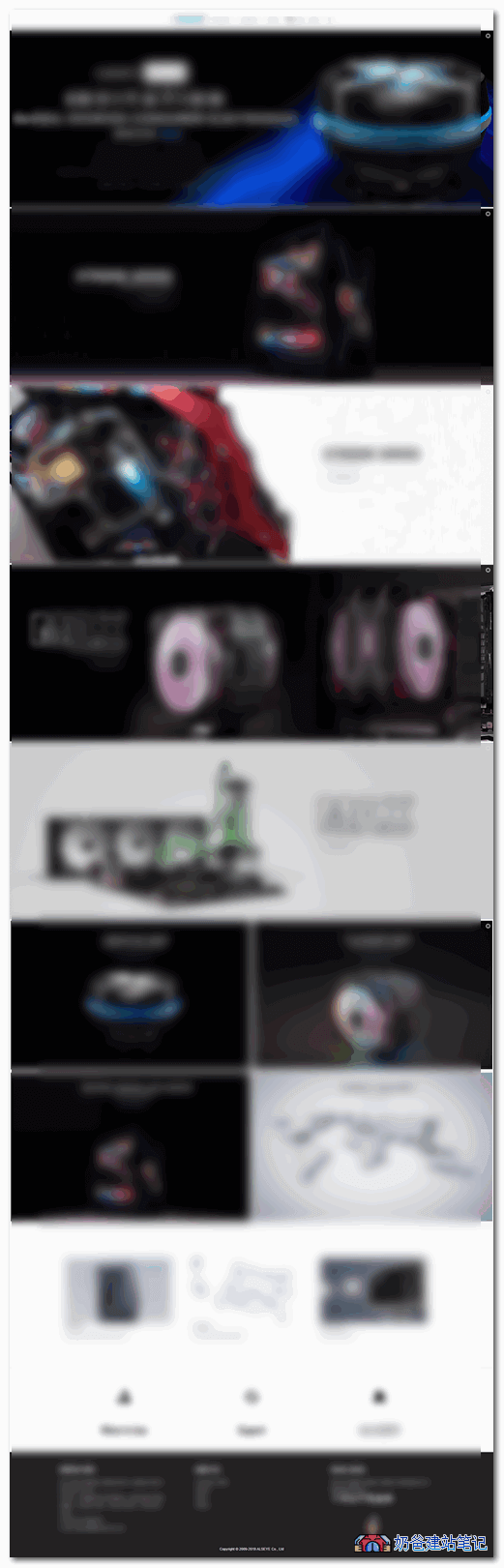
Looks very cool, right? The entire page is full of images.
In fact,this type of layout is very unfriendly for SEO。
Why do I say that? Because your webpage is all images, with little text support. Search engines don't know what your webpage is about, let alone keyword optimization.
Next, let's look at these images on the homepage.
For an English website, naming images directly in Chinese is too casual. Even for Chinese websites, Naiba recommends avoiding Chinese names whenever possible, as under certain server environments, using Chinese names may cause garbled characters, leading to file 404 errors.
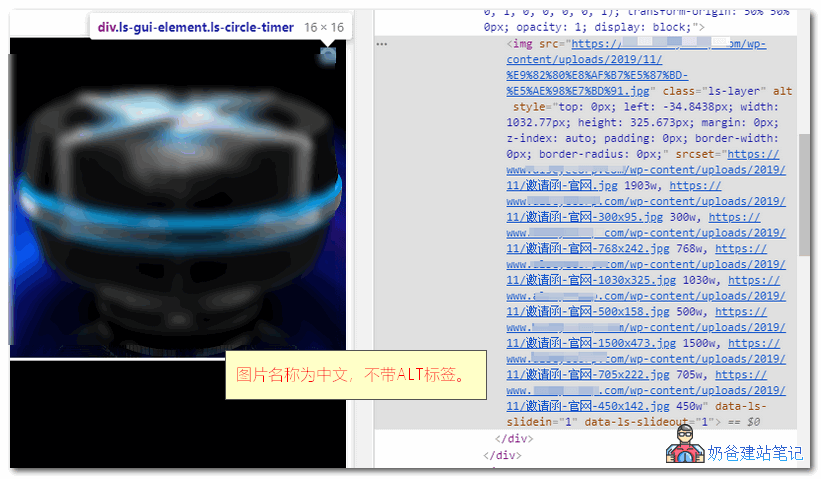
Most importantly, the image ALT tags are not filled in. Search engines typically judge the content of your images through ALT tags. If you don't fill them in, search engines like Google won't know what your images are about, and you'll miss out on the opportunity to gain traffic from image searches.
Let's continue to look at the source code.
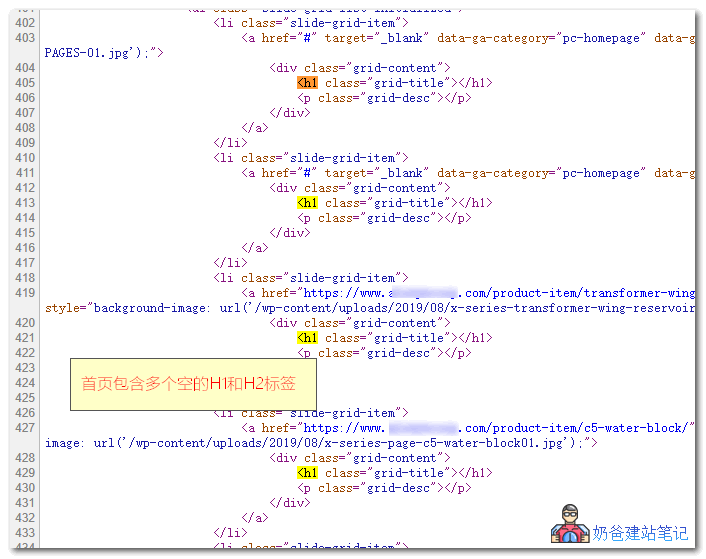
In the source code of their entire website homepage, there are multiple empty H1 and H2 tags.
The total number of H1, H2, and H3 tags on the entire page is as many as 31.
What does this mean?
This means it's completely random and messy.
H tags are very important in search engine optimization and cannot be used arbitrarily. Usually, a webpage should only contain one H1 tag, which is the title of the webpage.
H2, H3 tags serve as subheadings, but what's the point of having 31 tags on a webpage with no text?
Now, let's look at the most critical TKD values.
TKD is the abbreviation for (title, keywords, description).
Nowadays, the keywords value can basically be omitted. Google suggests you don't write it, so only T and D are mentioned.
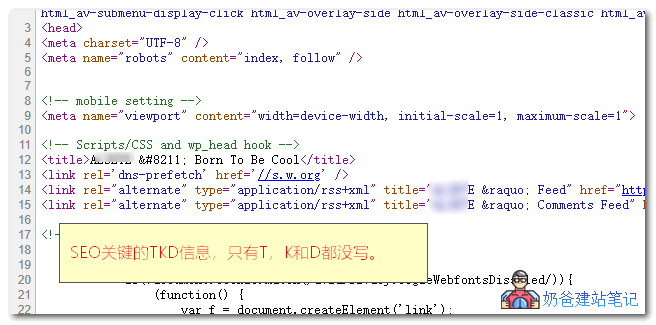
It can be seen that in the source code of this foreign trade official website, there is only a title, and no description information. Search engines don't know the main content of your website.
The most obvious SEO data.
For SEO beginners, the above analysis might be hard to understand, so let's use webmaster tools to take a look.
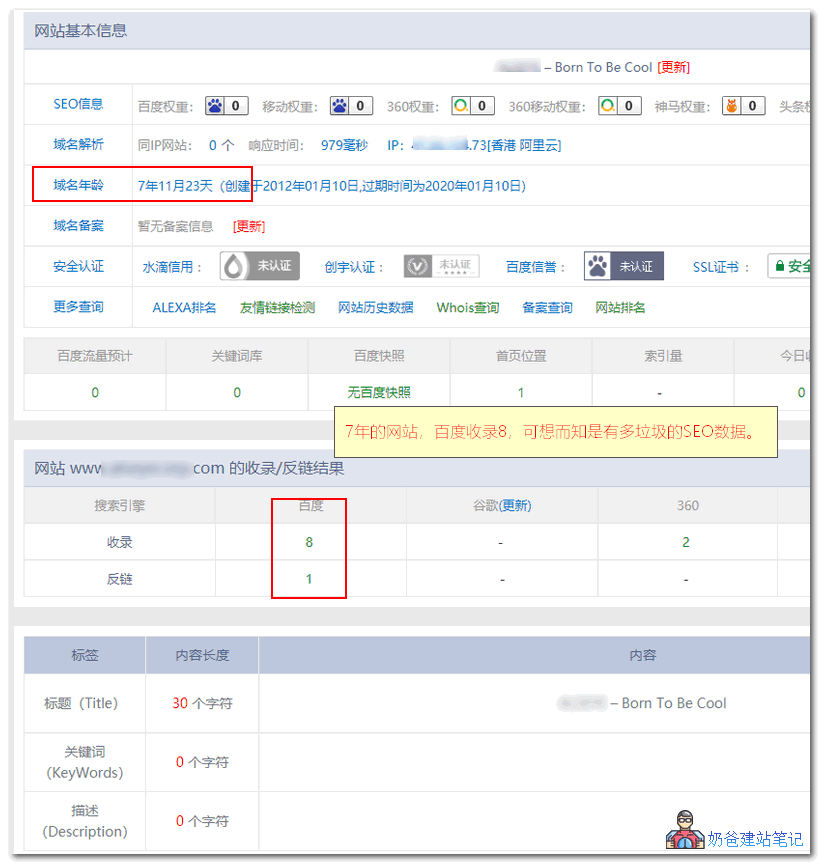
The domain age of this website is almost 8 years, but Baidu has only indexed 8 pages (their Chinese and English sites are under the same domain, so only 8 pages are indexed for both sites combined).
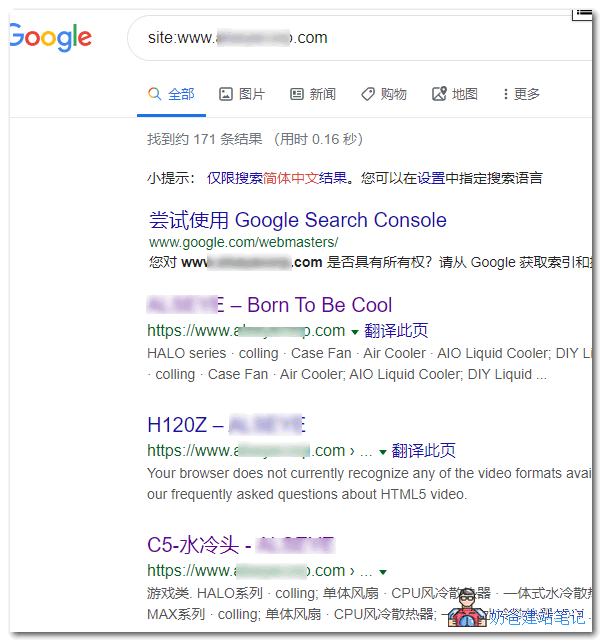
Google has indexed 171 pages, but you can see that the descriptions are all content crawled by Google itself. Do you feel like clicking on these page descriptions?
No, and with 171 such garbage pages, what traffic can you expect from search engines? It's impossible to get any traffic.
Therefore, it is recommended that when choosing a website building company, you select a reliable one that doesn't neglect basic SEO information. Before building the website, confirm that after the contract ends, all data will be provided to you and not locked so you cannot modify it.
If you want to save money, you can check outSteps to Build Your Own Website, and thenBuilding Your Own Website;
If you want to find a reliable website building company, you can chooseNaiba Foreign Trade Website Building, and you will definitely not encounter situations like those analyzed in this article.