
When Naiba communicates with some foreign trade website building users, it is found that some users think the blog function of the website is useless, they will not update articles, nor do SEO. They believe building a website to display products and then running Google ads is enough. In fact, for any business website, the blog function is a very important aspect. Below, we will specifically analyze why foreign trade websites need a blog.
What are the benefits of having a blog system for an e-commerce website?
- It can help you build trust, authority, and search engine rankings.
- Gain traffic from organic search.
- Build brand awareness and loyalty.
- Attract potential users to become paying customers.
Although running ads can directly and roughly gain traffic, a blog system can help you better convert that traffic. The combination of content marketing and blogs is suitable for most brand operations. E-commerce brands can gain many additional benefits from traditional marketing.
6 Reasons Why Foreign Trade B2B and B2C Websites Need Blog Posts
Why should our business have a blog system and update blog posts when building a website? There are several reasons.
1. Every consumer is looking for answers, and you have the answers.
No matter what product you sell or which industry you are in, you must understand that every potential customer will search for answers on the internet. If you happen to have that answer, a potential customer will invisibly enter your website.
If the content you provide not only has the answers they need but also more authoritative knowledge, it will invisibly increase your website's brand and trustworthiness.
The more trust users have in your website, the easier it is to sell your products to customers.
This is also whyNaibabijishares some tutorials on building websites and WordPress articles.
2. A blog can help increase website traffic.
Want more traffic to your website? Then blog posts are essential.
HubSpot conducted research on their client websites and found that websites with updated corporate blogs have 55% more traffic, 97% more inbound links, and 434% more indexed pages than those without.
This is easy to understand. A typical corporate website has only a homepage, about, contact, and product pages, totaling maybe a dozen pages. But if you update your blog, each article adds a new page. Over time, the number of indexed pages increases.
It's like a lottery: you have only one ticket, while others have hundreds or thousands. Who has a higher chance of winning?
Each time you publish content that meetsGoogle SEO optimization rulesit means your potential customers might search for your website. Over time, the content you provide will determine whether the traffic converts into readers, then leads, and then sales.
3. Combining an e-commerce website with a blog has proven effective.
Take a simple example: Shopify. Most people in foreign trade e-commerce know them. Shopify sells its services to thousands of independent business owners.
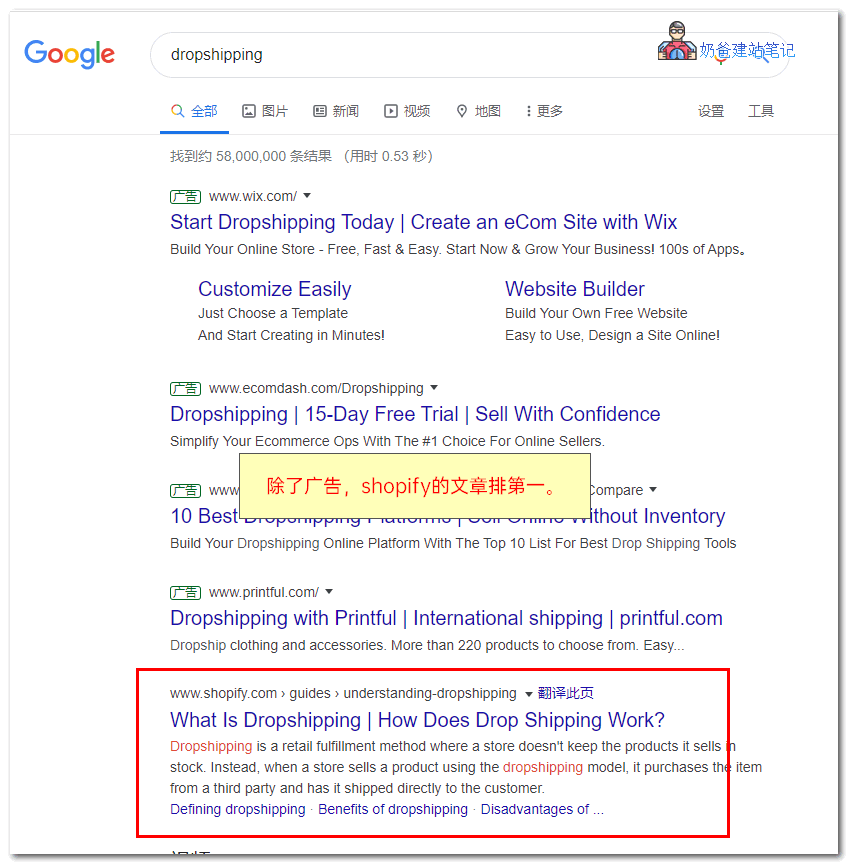
Searching for 'dropshipping' on Google, besides paid ads, Shopify's article ranks first.
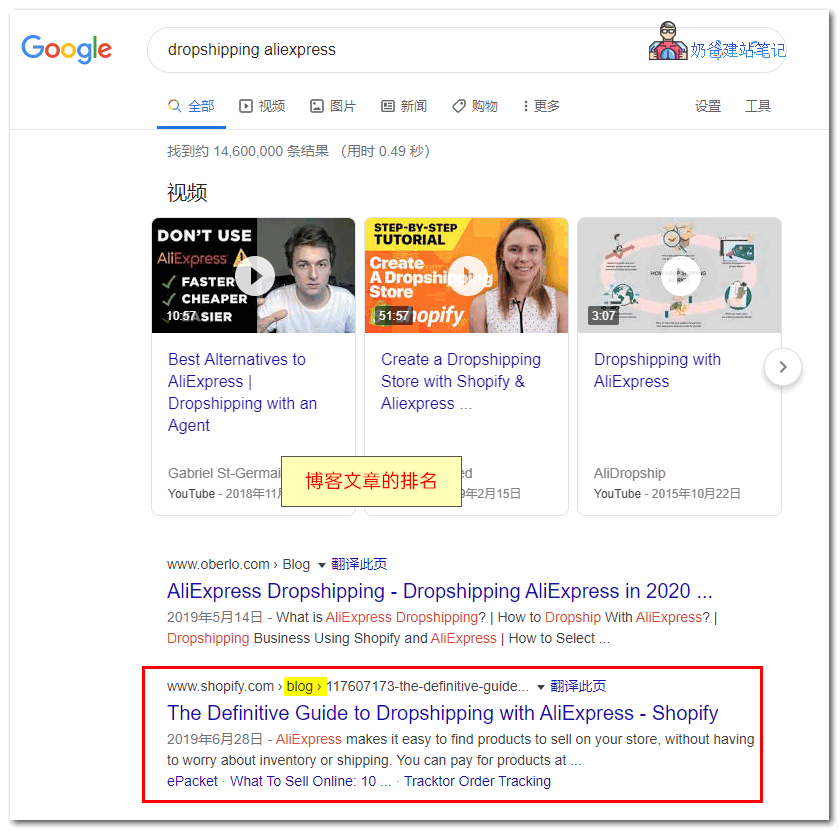
Similarly, searching for other keywords can also show Shopify's rankings.
Shopify obtains free search traffic from Google and other search engines by writing articles with high-conversion and high-profit keywords. This is why many foreign trade companies choose Shopify, because you may see Shopify's presence when searching for related articles online.
4. Users read blog posts before purchasing a product.
TakeNaiba's hosting businessFor example, those who ultimately decide to ask Naiba to build their website usually read the content on the site first. If my blog content is empty and lacks any substantive knowledge about websites, you would undoubtedly not trust it.
As early as 2014, the foreign research institution Dynata conducted a survey:
- 84% of people decide to purchase a product based on descriptions in a blog;
- 46% of people will research products by reading blogs.
For example, if you want to buy something, you will also search on Baidu or Google to find out which product is good.
5. A blog can help you build brand trust.
If your customers see your blog posts when searching for articles related to your products, it will undoubtedly increase their trust in your website.
Key findings from CMI's 2019 B2C report show that content/blog is one of the primary ways most marketers build customer loyalty (81% say it's a top priority). Another 56% increased their content creation budget, the highest area of spending in 2019.
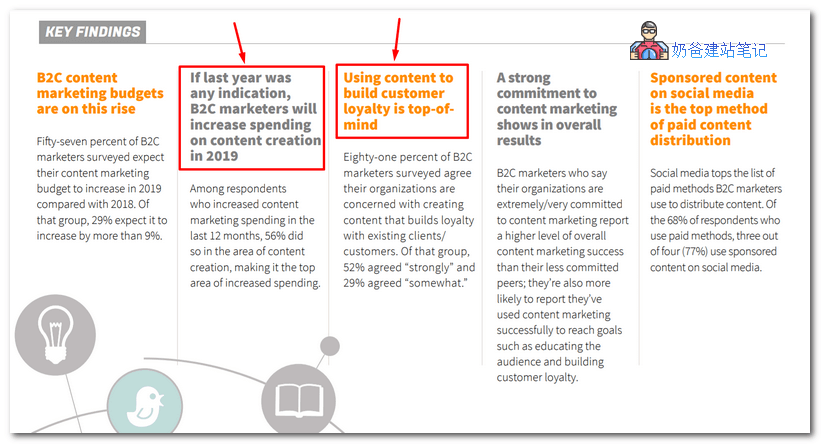
As the report states, attracting content traffic is important, but „giving them a reason to come back“ is how you achieve long-term success. Blogging is how you gradually build loyalty while simultaneously increasing brand awareness.
6. Blogs have a remarkable return on investment (ROI).
In the first few weeks of writing a blog, you may find that traffic doesn't change, and you might run out of ideas and feel creatively drained.
The charm of blogging lies in this: in the early stages, you may invest a lot of effort in writing and updating articles without seeing significant traffic.
However, once your blog starts gaining traffic, maybe only a few people read your content at first, but some of them might share your blog posts with friends, who then share with their friends.
The more people read your website and the longer they stay, search engines will consider that your website meets user needs, giving you more authority and bringing more traffic.
The effort you invested earlier will pay off in six months, a year, or even years later.
Blogging provides a magical way to build brand trust, increase traffic, and cultivate potential customers. Moreover, besides mental effort, blogging requires no financial investment. Why not do it?
Starting a blog earlier is better for a business website.
Blogging is a way to help any website gain long-term benefits. It is one of the best methods to increase website traffic, build influence, and establish loyal repeat customers.
However, blogging won't wait for anyone. The longer you delay, the longer you have to wait to see results.
Writing blogs usually relies on SEO for traffic, and SEO typically takes six months to a year to show results. At the same time, if no one in your industry is blogging and you start first, you can easily gain traffic for many keywords.
Start now, hurry up and update your blog. If you don't have a blog yet, refer toWP installation tutorial, orPaid Website Buildingnow.