Naiba recently reviewed several friends' foreign trade websites and found that, besides issues with titles and descriptions, the most common problem ismissing image ALT tags. Therefore, this article introducesthe role of image ALT tags in Google SEO and how they should be written.。
What is an ALT tag?
First, a visual demonstration: the alternative text for the image in the picture below is the alt tag.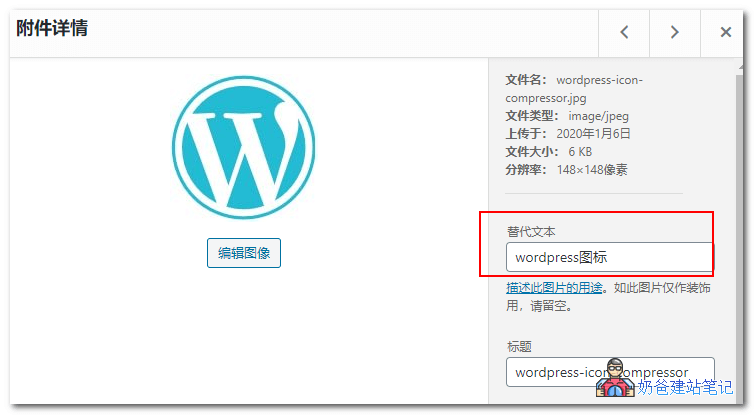
The format in HTML code, if you are using WordPress, is as follows:
<img class="class值" src="图片地址" alt="alt标签内容" width="宽度" height="高度" />
You can now go into your own self-built website's backend and check if the images you uploaded all lack this value?
The alt tag serves as a text hint for an image, typically used to describe the content of the image. Alt tags can play a certain role in SEO and also serve as a rescue for articles when images fail to load.
How does the alt tag rescue an article when images fail? It's like the situation shown in the picture below.
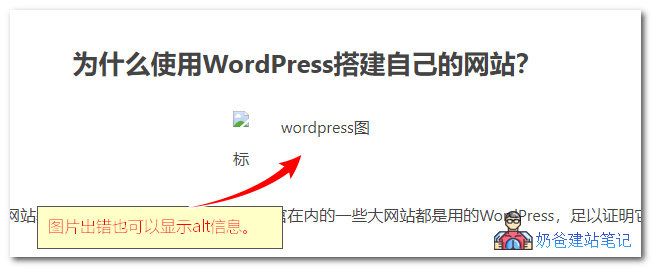
When the images in your article are missing, the webpage can display the alt attribute value of the image, allowing users to mentally picture the image content while reading the article, which is more friendly than a purely broken image.
The role of ALT tags in SEO
Most friends running foreign trade websites are selling products, so there are many product images on the website. Therefore, the role of alt tags in the SEO process is quite important.
1. Alt tags directly affect image SEO performance
As anyone who uses search engines knows, besides searching for web pages, image search is also a commonly used feature.
Filling in the alt tag helps search engines quickly identify the content of your image (with today's technology, even if you don't fill in alt information, machines can probably identify the general content of the image, but it's definitely not as accurate as the alt tag).
Search engines identify your image content through alt tags and rank your images through context analysis. When users use image search, they may find images from your website, thus gaining traffic through image SEO.
For example, the image below shows the effect of searching for Naibabiji website building notes on Google Images.
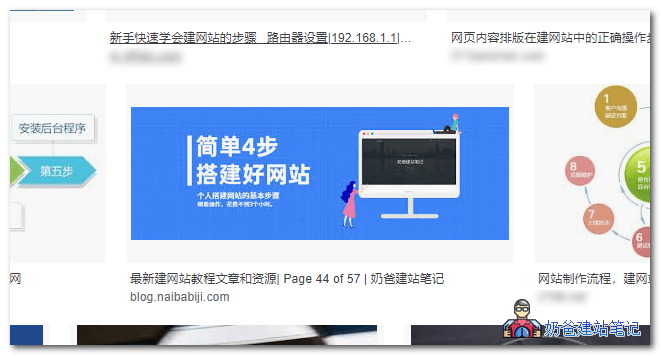
2. Alt tags can enhance user experience and search engine friendliness
User experience: As shown earlier, even if the image fails, users can know the image content through the alt tag and fill in the blanks mentally, without a sudden break in thought.
Search engine friendliness: Simply put, whether it's Google, Baidu, or Bing, they all recommend filling in alt information. If you don't, you're not following their advice, making it harder for them to crawl and index.
Note: Alt tags do not increase keyword density, so avoid keyword stuffing.
How to correctly write alt tags?
做Google SEORemember one basic rule: put user experience first.
So how should we write the alt information for images?
That is,be factual; write the tag based on what the image content actually is.

Google's official recommendations are as follows:
Use short but descriptive filenames and alternative text
Like many other parts of a webpage considered for optimization, short but descriptive filenames and alternative text are ideal.
Practices to avoid:
- Avoid using generic filenames like „image1.jpg“, „pic.gif“, „1.jpg“ whenever possible (if your site has thousands of images, you might want to automate the naming process).
- Avoid excessively long filenames.
- Avoid stuffing alternative text with keywords or copying and pasting entire sentences as alternative text.
Provide alternative text when using images as links
If you decide to use an image as a link, providing alternative text helps Google better understand the page you are linking to. This is similar to writing anchor text for text links.
Practices to avoid:
- Avoid writing overly long alternative text that could be considered spam.
- The website navigation uses only image links.
References:
- https://support.google.com/webmasters/answer/114016