Yibing is a well-known expert in the foreign trade circle. Today (December 30), he held a public lecture, sharing his views on the foreign trade industry and answering some foreign trade questions. Naibabiji shares the video Baidu Cloud download here.
Video Download Address:
Yi Bing's Annual Live Broadcast "Entering 2020 Without Any Doubts in Foreign Trade"
Link:https://pan.baidu.com/s/12izOd-NL64a2TTaoa2pBTgExtraction Code: 8f45
Text Version:
Summary of Foreign Trade in 2019
Polarization is becoming more severe
In the post-foreign trade era, policy dividends are fewer, demographic dividends are fewer, and the era of easy money is over. For those who work hard and are dedicated, it is a good era. If you are not good enough, someone better will replace you.
What exactly should we do?
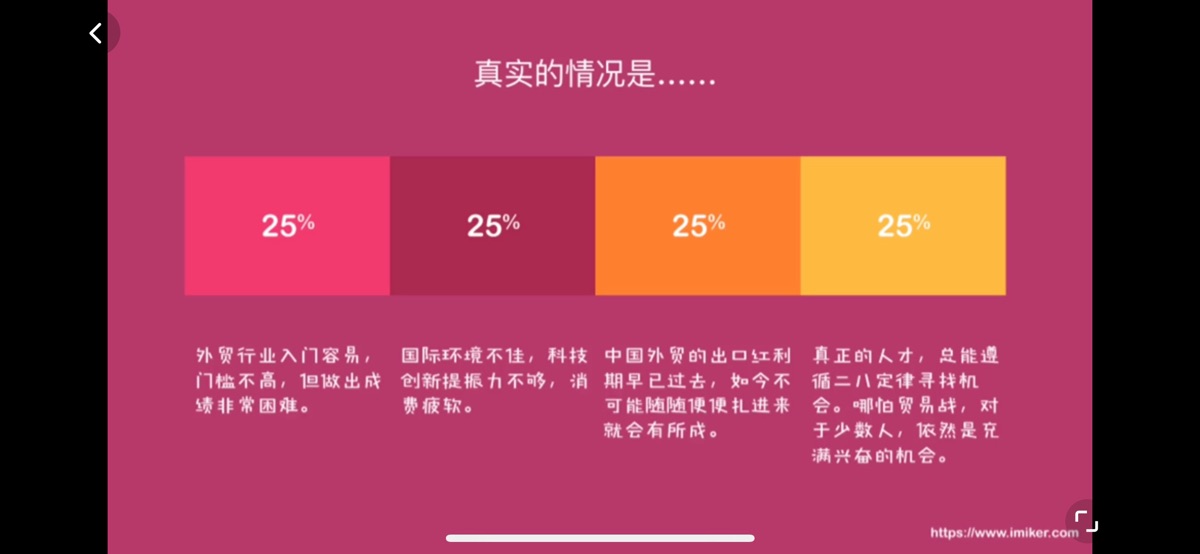
- Return to a normal state, survival of the fittest.
- Consider whether you want short-term gains or long-term ones. You need to think clearly about which path you want to take; starting in any industry is very difficult.
- Costs are rising across all industries. What can we do next? We can only achieve this through industrial upgrading. China has the most complete industrial chain.
- People suitable for this industry. Those who want to make quick money and find it hard to settle down and focus will struggle to succeed. You need to be hardworking and dedicated.
- The 80/20 rule always exists, and many people will seek opportunities from trade wars. For example, without the situation of US tariffs, the liquidity of US customers might not be so good, and you might have no way to break in. However, once a trade war starts, prices rise, and customers might inquire everywhere to see if there are better prices; „backup options“ might seize the opportunity.
Several Predictions for the 2020 Situation
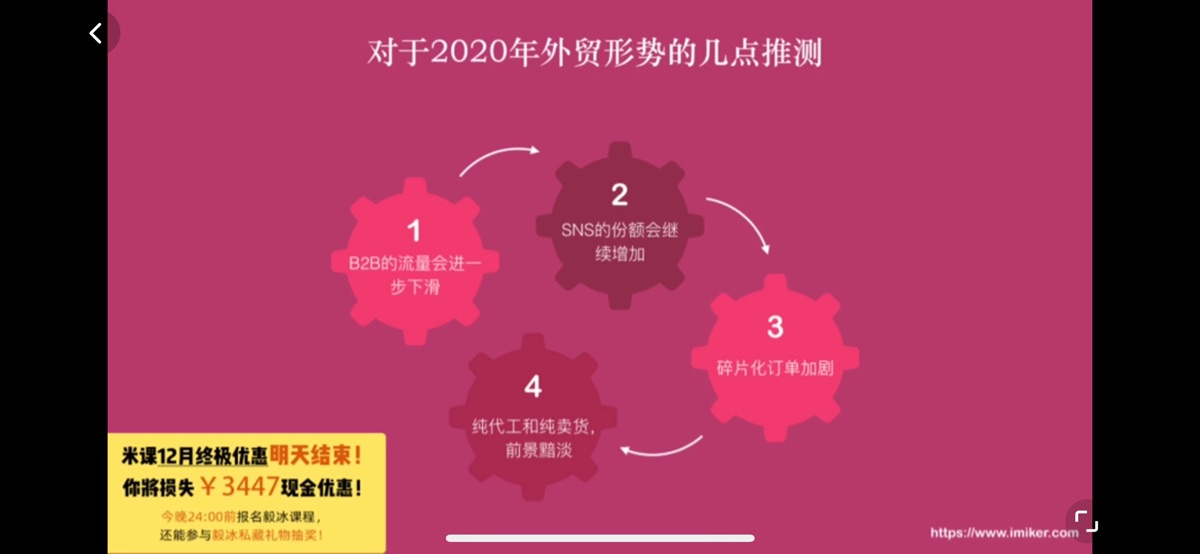
1. B2B traffic decline
2. SNS share will increase
3. Fragmented orders intensify
Where have the big buyers gone? Buyers who make decisions may be older and still use very traditional methods, such as exhibitions.
4. Pure OEM and pure selling have bleak prospects
- Price
- OEM is difficult to have high profits.
- Where am I better than others, where am I different, and which segment of customers should I target? If you can't even convince yourself, how can you convince others?
What Can We Do in 2020?
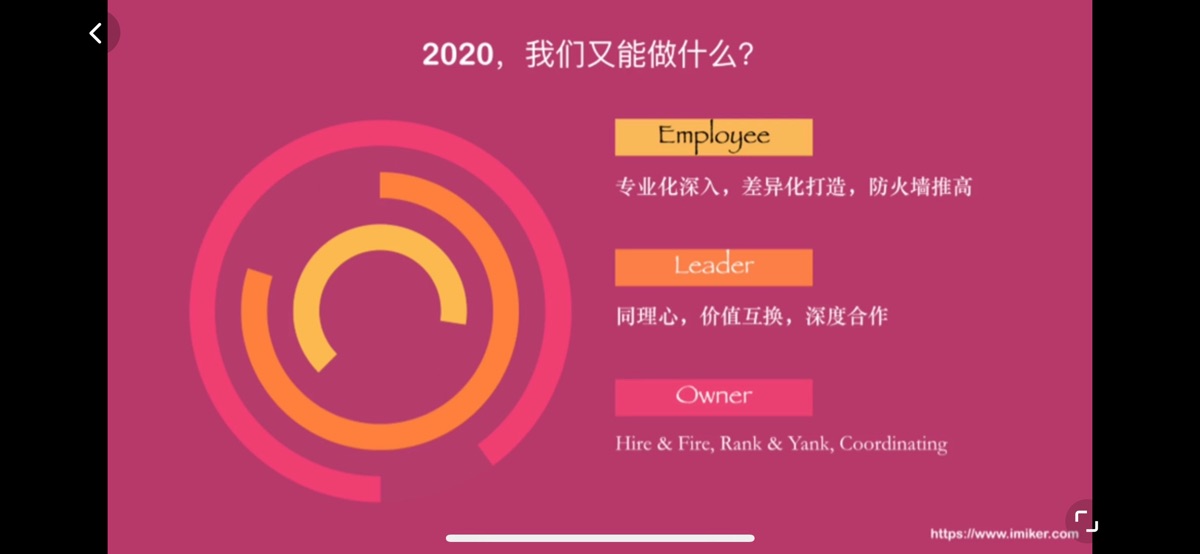
1. Reliable
2. Professional
3. As a leader, you need to know what customers want.
- Know what the customer wants and adjust strategies accordingly. Cooperation isn't just about the customer placing an order and us accepting it. Is what we provide what the customer needs?
- What value can we exchange between us?
- Deep cooperation, we are all in the same boat.
- How to make it difficult for customers to switch orders, what significant profit sharing is there?
4. Owner
Let the right people do the right things
Q&A
- Price issue
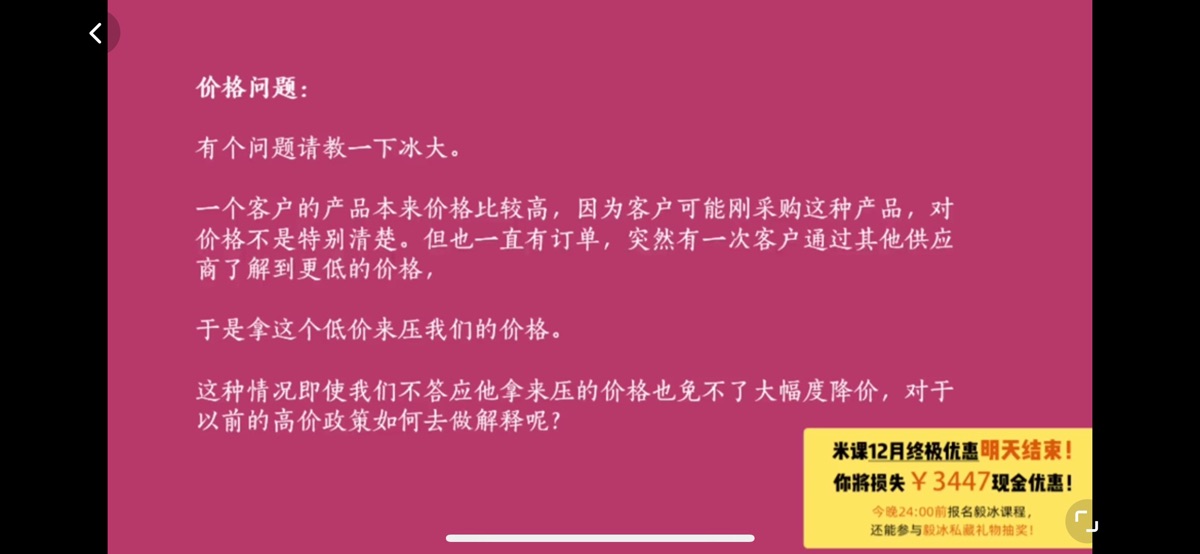
- Even if agreed, it might be hard to secure the order; immediately agreeing to a price cut makes the customer think you were making a lot of money before.
Absolutely cannot lower prices drastically, as that would confirm that previous quotes were arbitrary. Provide the customer with two options: First, explain that your price is reasonable, giving a bunch of plausible reasons. But since you're negotiating with me today, I'll lower the price a bit, about 5%. Second, even if competitors' prices are lower and the pictures look similar, our products are different; we might need to replace some components, then we can lower the price by 15%, still slightly higher than others. Also, without lowering the price, changes can be made elsewhere, such as altering payment terms.
2. Partnership?
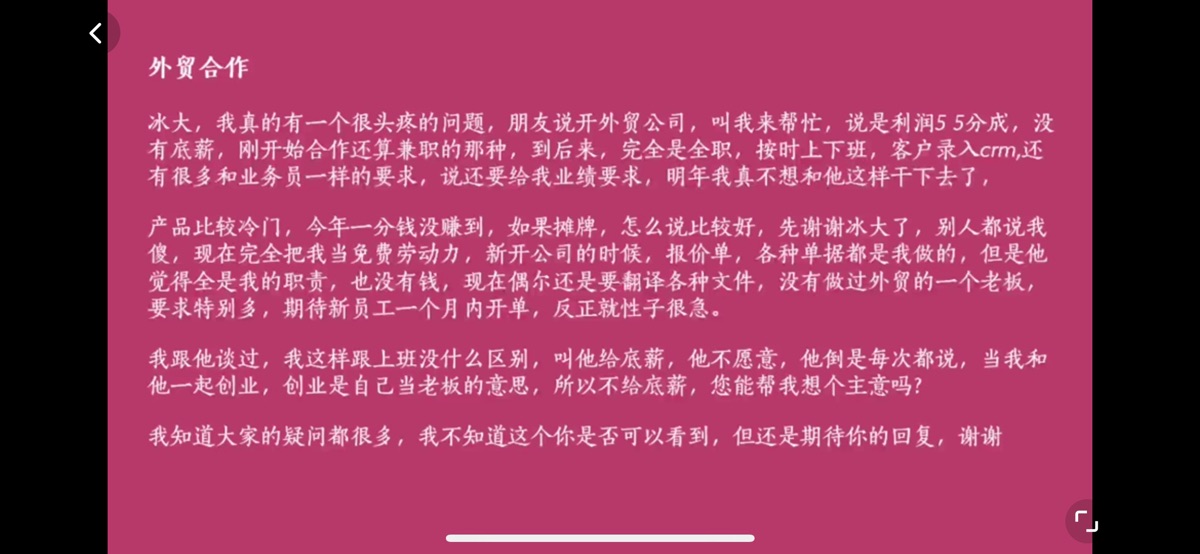
This is entirely because the cooperation model was not clearly discussed at the beginning. Regardless of whether you are willing to accept the base salary, you need to clarify all contracts.
How many resources are you willing to invest in developing customers?
3. Pure selling or OEM are both difficult.
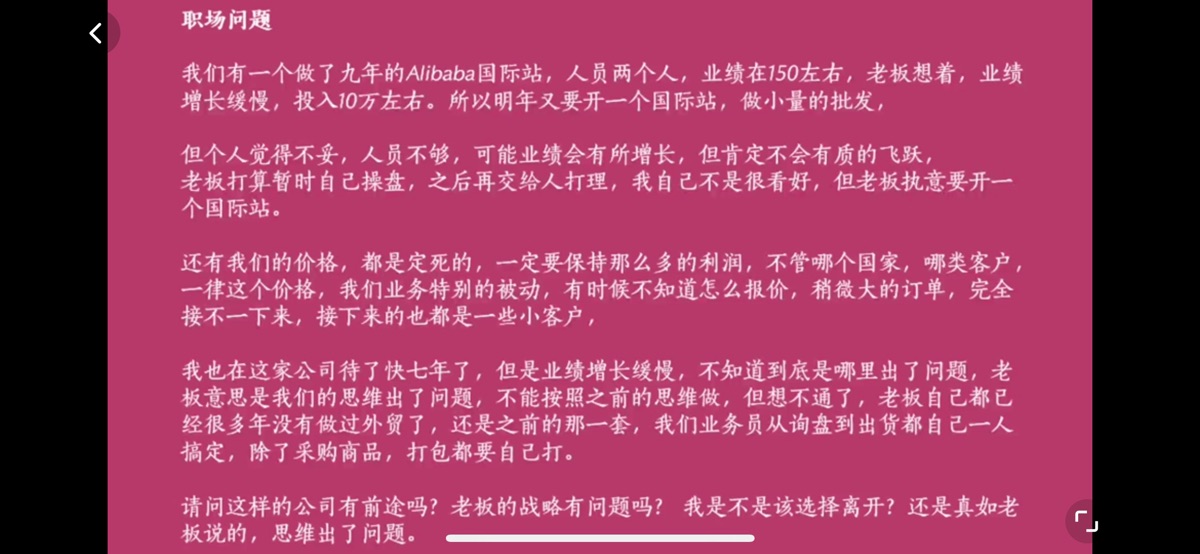
Selling goods can only realize the value of selling goods
After working at the company for 7 years, how much has your personal advantage increased?
Why are you not achieving good performance? What are the reasons? Under a large platform, how to realize value?
Waiting passively has little value. What is the value of a salesperson? Under high competition, no breakthrough is seen.
4. OEM
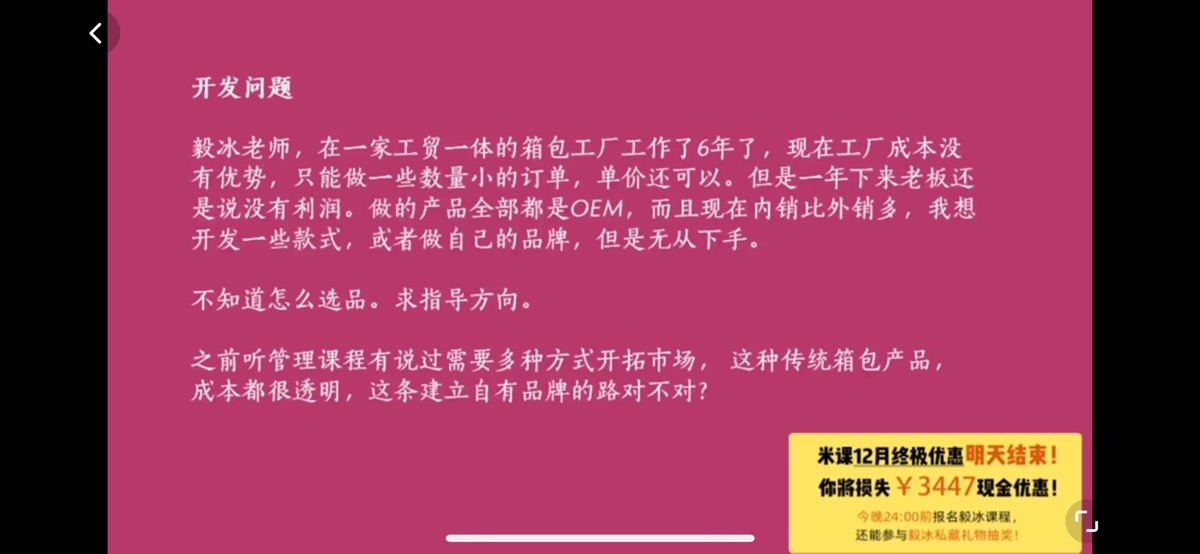
Is the profit really nonexistent? No profit is questionable.
Try to make your own products, develop relatively niche customers to build your own brand. It is very difficult for free brands to enter the mainstream offline market.
Product selection, find a breakthrough from the existing product line.
5. Where is the path for Soho?

Flexible, the management model is not so rigid, can handle small orders.
Professionalism, not price competition.
Service
Efficiency
Do what others won't do, focus on high-value, low-weight products. As long as there is some profit, keep launching new products. Big companies can't match your speed in launching new products.
6. Customer does not reply
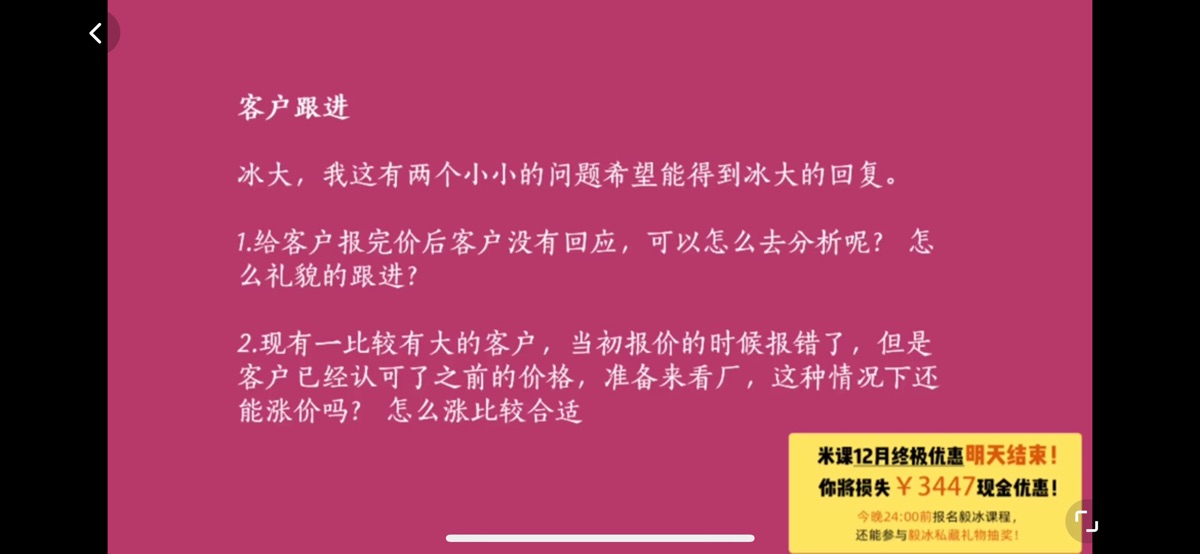
If the customer hasn't received the email, you can call the customer.
If the customer received the email but hasn't replied, note that overseas speed is not as fast as domestic. They may compare prices or do other things. Never immediately follow up with a price reduction.
7. Price quoted incorrectly
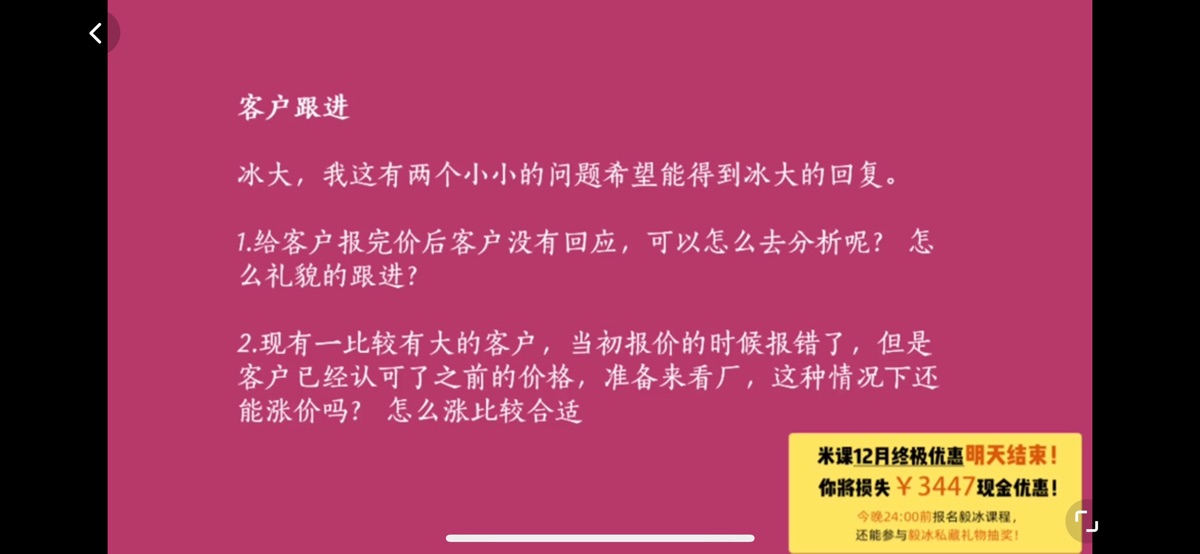
First check if the price still has profit. If profitable, you can tell the customer that the price was quoted incorrectly and needs to be increased by 20%, but due to the error, orders within the quotation validity period will still go at this price, and subsequent orders will be increased.
If there is no profit, don't mention it in the email either, as it may scare the customer away. Wait until the customer visits the factory, then apologize in person and ask if the price can be adjusted to break even with a 5% increase. If the customer says no, then understand and ask if the next order can be increased by 3%. Generally, customers will understand.
8. Compensation
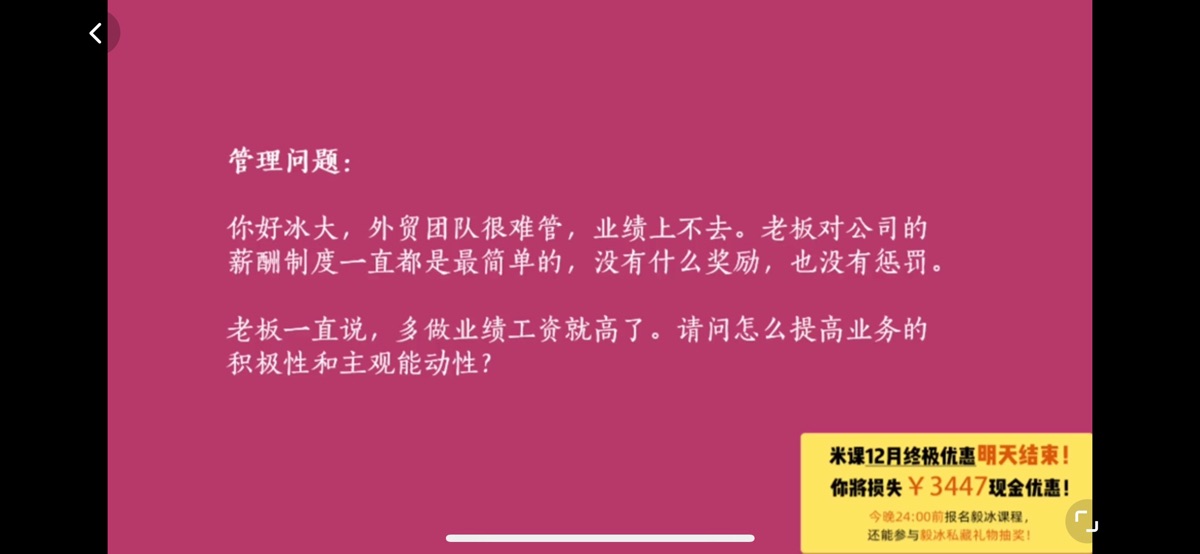
The compensation system should make salespeople feel that their work is valuable.
Is there any reason for the customer to work for you?
9. How to start Soho?
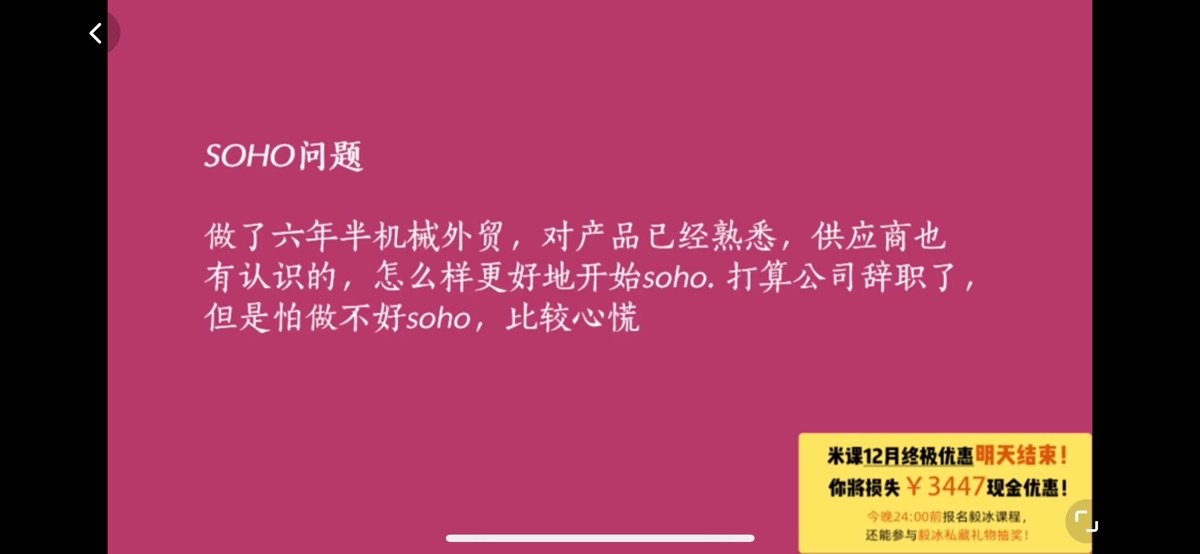
What are your strengths and weaknesses? Consider comprehensively whether to proceed.
If you just know the supplier, that's not enough. Without deep cooperation, you won't get good support. It's also okay to negotiate with suppliers with an order in hand. If you have no suppliers or customers but sufficient funds, that's also fine.
10. How should a beginner do it?
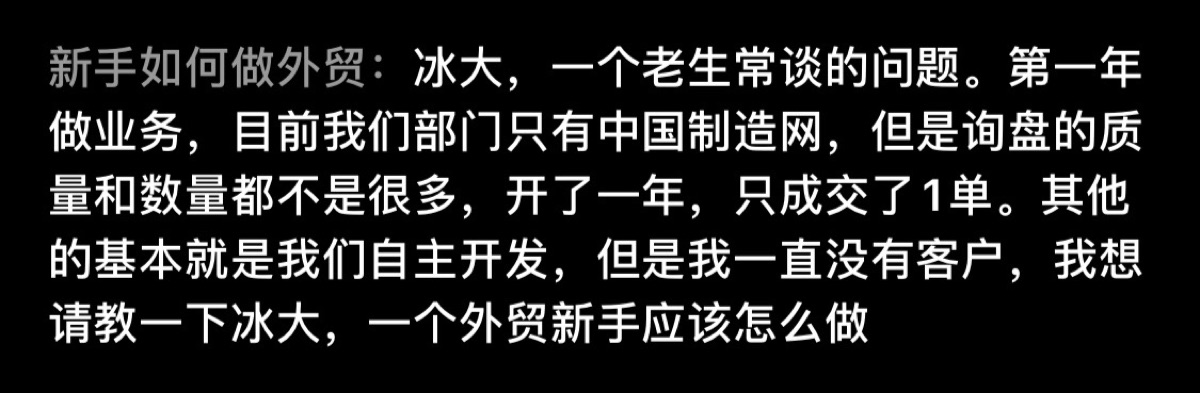
Foreign trade beginners should learn first.
Even if you contact customers, what then? Many friends are too anxious. The first task should be to understand your product and industry, and improve your abilities comprehensively. Understand customer needs through communication. Through communication with one or two customers, you can learn what they are thinking and how to make them interested in you.
Independent development is fine, but why do you feel your contacts go unanswered? Because your persuasion is insufficient.
Question 11: Writing year-end summaries and setting goals.
When writing a year-end summary, you can write it like this: how long it took to secure the first client at the company, how many clients you collaborated with in the first year—quantify the data. Highlight the key points.
Question 12: Two clients with the same brand?
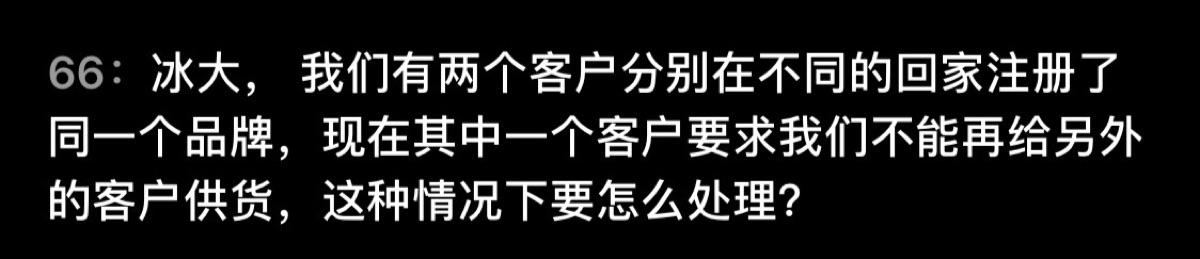
The brands are real. Choose the client with higher profit to collaborate with first, and stabilize that client. Register another company to work with the other client.
Question 13: Child is three years old, previously worked in e-cigarettes, how to return to the workplace?
What are your expectations? Do you want to build a career or just need a job? If you need to take care of children and only have time to work during the day, find an easy job. If you want to make a mark in your career, think about what your strengths are.
Is the product important in sales? The product is not that important; it can be learned. You need to clarify your value. If you want to be in management, you need management skills. Soho is also possible. Where are your strengths? Analyze based on your current situation.
Question 14: Company-to-individual transfers?
Business-to-private transfers are okay for legal persons, but other accounts may have issues. However, if you always transfer to personal accounts, it's hard for customers to explain to their bosses why they are transferring to a personal account.
Either register a domestic account or register an offshore company.
Question 15: How does a parachuted manager handle business? Company-to-individual transfers?
An outsider will face a problem: if you don't deliver results, the boss will let you go.
For example, how did Tang Jun do it? He said nothing, did nothing, spent a lot of time understanding the company, the team, and the employees. He lowered his stance, told everyone he was there to learn, got close to everyone, let them understand him, and prevented them from ganging up against him. He understood the problems among employees and then restructured the team. A policy of gentle persuasion. First try to integrate into the team, then try to make things happen.
Question 16: The client has a stable relationship with an old supplier. How can the backup supplier become the primary one?
If the old supplier has issues, don't badmouth them to the customer. Instead, praise the customer and say their supplier is good. But you can tell the customer, as a professional buyer, not to put all eggs in one basket. Ask if they can give a small order to cooperate. Don't say you know where the old supplier sources from. Don't think from your own perspective; pay attention to their pain points.
Text version compiled by Krystal Qian. This open class did not cover foreign trade Soho self-built websites, as it is not Teacher Yi Bing's main teaching area.Foreign Trade Self-built Websiteneeds can directly check the relevant tutorials on Naibabiji.